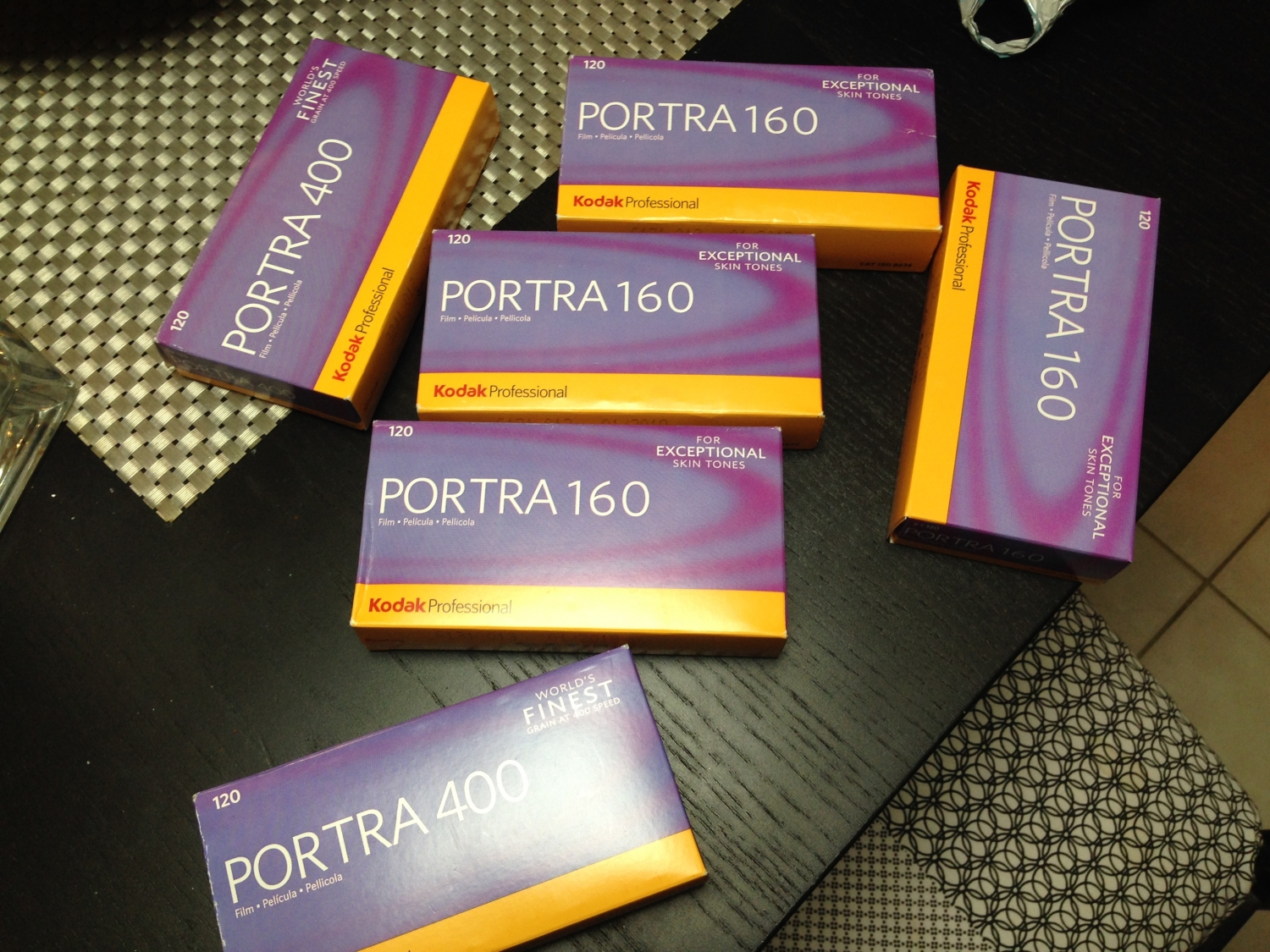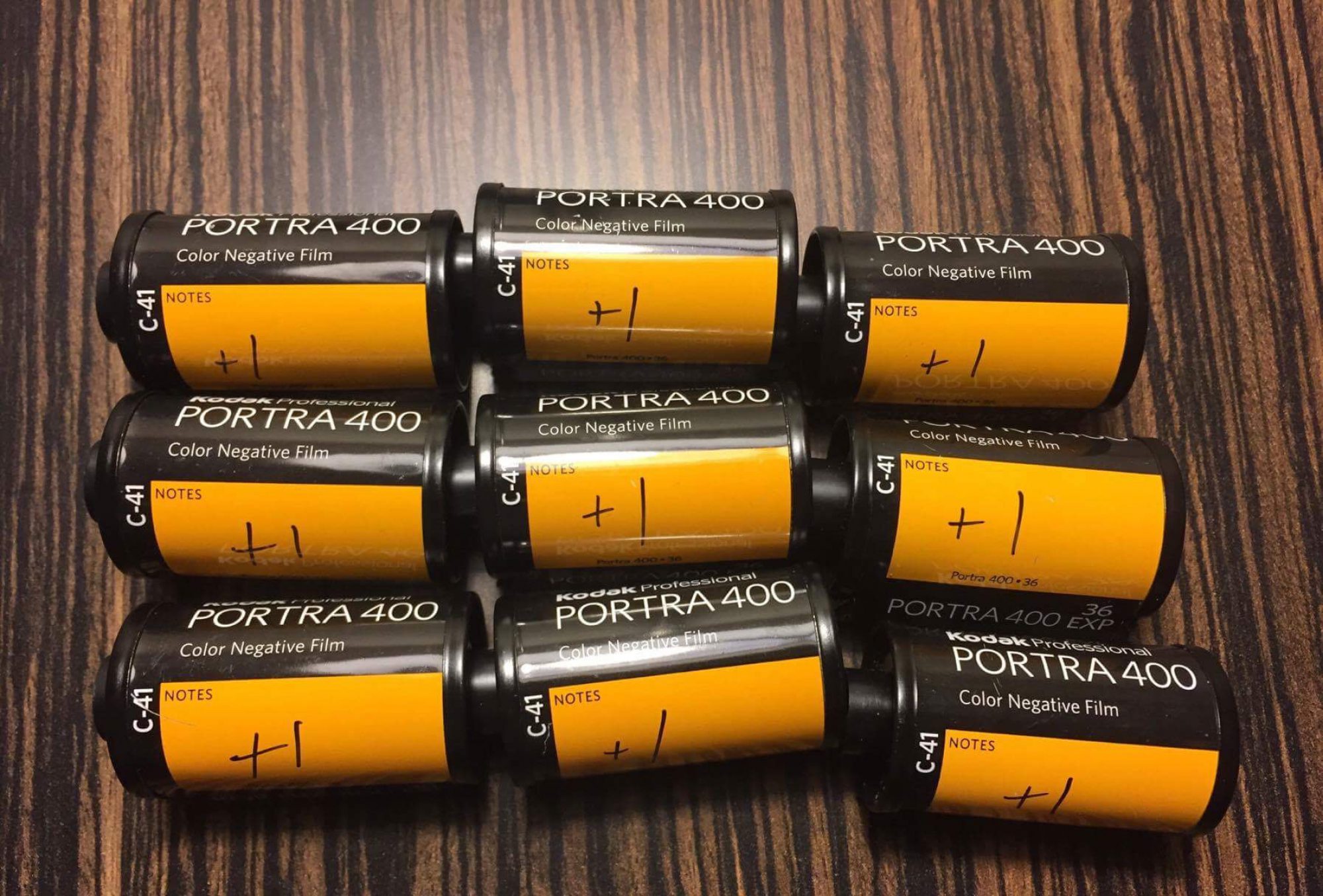
The new PORTRA 400 is the world’s finest grain high-speed color negative film. At true ISO 400 speed, this film delivers spectacular skin tones plus exceptional color saturation over a wide range of lighting conditions.
For years, professional photographers have preferred KODAK PROFESSIONAL PORTRA Films because of their consistently smooth, natural reproduction of the full range of skin tones. In that same tradition, the new PORTRA 400 Film is the ideal choice for portrait and fashion photography, as well as for nature, travel and outdoor photography, where the action is fast or the lighting can’t be controlled.
You can read more here.

Vagabond Mini™ Lithium is small and lightweight (weighing just 3.5 pounds including quick-change high capacity lithium battery), designed to operate from one to four Paul C. Buff, Inc.™ self-contained flash units (AlienBees™, White Lightning™ and Einstein™ flash units), but has application for powering flash units from other manufacturers*. The packaging is highly evolved and is completely enclosed within a strong, high-impact, flame retardant ABS housing. The battery is fully encased in the same ABS material and can be instantly replaced with the slide-in latching mechanism; there are no wires or user connections other than the AC outlets and charger inlet. The unit additionally includes a light stand mounting mechanism and a convenient carrying strap.
The Vagabond Mini™ Lithium inverter includes two 120VAC or 230VAC outlets, a multi-level accurate battery charge indicator and a convenient front panel battery charging connection for the supplied 3-hour universal rapid charger (95VAC to 250VAC charger input). For operating 120VAC lights in 230V studios, the charger may be plugged in such that the unit is charging while in use, allowing continuous operation in most uses. For heavy use, spare batteries can be charged externally so that they are ready to instantly plug in. The Vagabond Mini™ Lithium may also be powered from an external sealed lead acid (SLA) battery, if desired.
The product utilizes the very latest LiCoxNiyMnzO2 lithium battery chemistry to provide extremely high power density and elimination of battery sulfating and poor efficacy that plagued previous battery-operated systems using heavy and inefficient sealed lead acid batteries.
| Weight / Dimensions | 3.5 pounds total weight / 2.75” x 4.3” x 7.5” dimensions including battery |
|---|---|
| Battery | 14.8V 8.8AH LiCoxNiyMnzO2 lithium battery (130 watt-hours) |
| Battery Charging | 3-hour rapid charging with supplied universal charger (95VAC to 250VAC) |
| Powering Capacity | one to four Paul C. Buff™ flash units (the more lights connected, the longer the recycle time) |
| Recycle Time (see Test Data below) |
recycles 160 Ws in approx. 0.75 seconds recycles 320 Ws in approx. 1.5 seconds recycles 640 Ws in approx. 3 seconds recycles 1280 Ws in approx. 7 seconds |
| Battery Life (see Test Data below) |
640 Ws: Typically 400 to 500 shots per charge 1280 Ws: Typically 200 to 250 shots per charge |
| Storage | discharged battery can be safely stored for months at a time without damage. There is no sulfating or “memory effect” |
Like essentially all battery/inverter type supplies, modeling lamps are not generally used because their power draw would quickly deplete the battery and slow recycle times dramatically.
About The Battery: The 14.8V 8.8AH LiCoxNiyMnzO2 Lithium battery pack provides 130 watt-hours of energy and may be discharged to approximately 95% of its capacity before the internal protection circuitry causes shut down. Recycle time of attached lights remains constant from the first shot to the battery depletion point.
By contrast, a 10lb 12V 12AH SLA (Sealed Lead Acid) battery stores 144 watt-hours of energy, but can typically supply only about 60% of its capacity to an inverter system (about 90 watt-hours). This is because SLA batteries suffer from increasing internal resistance as they are discharged. This robs the usable power and causes recycle times to get longer and longer as the battery is discharged. Thus, the Vagabond Mini™ Lithium may be compared, in terms of energy delivered, to SLA systems using 15AH batteries weighing about 12lbs or more.
Sulfating: SLA batteries, like automobile batteries, suffer a condition known as sulfating. This occurs if they are discharged significantly and not immediately recharged. This process is cumulative and leads to premature loss of capacity and premature, permanent damage and failure. LiCoxNiyMnzO2 Lithium batteries do not suffer from sulfating and can be stored safely in any state of discharge for months at a time without damage.
Comparing LiCoxNiyMnzO2 Lithium Batteries To LiFePo Lithium Batteries: Some engineers choose LiFePo chemistry because its typical 70% life is 1000 to 1500 charge/discharge cycles, whereas LiCoxNiyMnzO2 chemistry typically maintains 70% of its original capacity for 400 to 800 charge/discharge cycles. However, LiCoxNiyMnzO2 batteries have a significantly higher power density and lower cost, so more flashes per charge are available for a given size and cost. For example, were the Vagabond Mini™ Lithium to use a LiFePo of similar size and weight, the rating would be 12.8V 7AH (90 watt-hours) and the cost would be significantly higher. Also, LiFePo batteries we have tested have higher internal resistance, so considerably less of the battery’s actual capacity can be delivered as actual flash power. Thus, the battery would have to be recharged about twice as often. So all factors considered, the total flash watt-hours of the LiCoxNiyMnzO2 chosen is approximately the same as an equivalent LiFePo battery, as is the actual real-use lifespan of the battery, but more flashes per charge result . . . affording the user longer shooting sessions without carrying or changing spare batteries.
How It Works: Inverter systems of this type were first introduced to the photoflash market by Paul C. Buff, Inc.™ in the 1990s. Because of the very high initial charging necessary for all monolight studio flash units, typical small inverters cannot generally be used. Additionally, using “simulated sine wave” inverters (as found in computer UPS units and inexpensive auto store inverters) are, in actuality, essentially square wave inverters. While these can sometimes be used, the square waves can, and often are, damaging to the attached flash units because they result in extremely high current flow in the flash unit…currents they were not designed to handle.
In order to successfully operate an AC flash unit from a small inverter, a complex process of “current limiting” must be employed. Since typical monolight studio flash units draw peak currents of about 17A from a 120VAC power line during recycle, a single studio flash unit would typically require about 2000 peak watts from the power line. Without current limiting, a single flash would also require 2000 watts from an inverter. The reason even three or four studio flash units can typically be operated from a 15A household circuit is because circuit breakers allow brief current surges of about four times the breaker’s rating. This allows for the high starting current of electric motors in refrigerators, etc.
Current Limiting: In order to allow single or multiple studio flash units to operate from a small inverter, the inverter must act as a 120VAC voltage generator when it is not overloaded, but must revert to becoming a “continuous current source” when the load exceeds its continuous power rating. To accomplish this, the inverter maintains a sine wave output during current limiting, but drops the AC voltage by whatever amount is required to keep the inverter within its power handling capability, or from simply shutting down. When recycling a single AlienBees™, White Lightning™ or Einstein™ unit, the voltage emitted by a 120VAC Vagabond Mini™ Lithium typically drops to about 80VAC during the initial recycle period, then builds back up to 120VAC as the unit charges. This amount of voltage drop is also typical for other brands of studio flash similar to those mentioned. If three or four such units are connected to a single Vagabond Mini™ Lithium, the voltage will drop significantly lower to as low as around 35VAC. Recycle time will become correspondingly longer as the limited current is shared between the light units.
*Note: All Paul C. Buff lights are designed to tolerate this voltage drop (“Brown Out”), as can most purely analog studio flash units, to varying degrees. However, most manufacturers of digitally controlled studio flash units failed to anticipate operation with current limited inverters, and designed the microprocessor power supplies to shut down at about 85VAC input. Thus many or most of such units will not tolerate operation with small current limited inverters, and simply crash. This is particularly true when multiple units are attached to a single inverter.
We anticipated this situation in the creation of Einstein™ by designing the unit to be crash proof with AC inputs as low as 30VAC, allowing multiple units to be successfully connected to a single Vagabond Mini™ Lithium. However, as with any inverter system, the more lights connected, the longer the recycle times.
Inversely Proportional AC vs. Inverter Recycle Relationship: AC powered studio flash units with very fast AC recycle times per Ws tend to draw significantly more current than typical flash units that recycle 500 to 650 Ws in around two seconds. Examples are the Paul C. Buff Zeus™ units, which recycle 2500 Ws in 2 seconds. These fast recycle flash units cause the inverter voltage output to drop much more than units with more modest AC recycle rates. The physics of the current limiting parameters cause fast AC recycling units to actually recycle slower from inverters than more moderate AC recycling units. This relationship applies to all current-limited systems including Vagabond™ I systems, Vagabond™ II systems and inverters from other manufacturers.
For example, one AlienBees™ B1600 flash unit (640 Ws) recycles in 2 seconds from AC power and 3 seconds from Vagabond Mini™ Lithium (213 Ws/second), while a Zeus™ unit (2500 Ws) recycles in 2.4 seconds from AC power, but takes over 20 seconds (120 Ws/second) from Vagabond Mini™ Lithium.
This relationship causes Einstein™ units, which cycle slightly faster than AlienBees™ and White Lightning™ from AC, to recycle slightly slower from Vagabond Mini™ Lithium. See test data below.
Test Data: This data was prepared by Paul Buff, using a production-ready Vagabond Mini™ Lithium, in a series of tests conducted during August and September 2010 under tightly controlled conditions.
Test 1: A single AlienBees™ B1600 was fired continuously (at its full power setting of 640 Ws) once every 10 seconds using the Pocket Wizard Intervalometer mode. The unit was fired from a fully charged battery until the battery reached its shutoff mode. The rate of flash emission was 3840 Ws/minute or 230,400 Ws/hour.
Initial recycle time was 3.2 seconds, which reduced to 2.9 seconds as the inverter warmed at about 40 shots. The inverter fan came on at shot #70 and remained on for the rest of the test. The maximum recorded temperature of the inverter was 113°F (45°C) and the maximum recorded temperature of the battery pack was 99°F (37°C). The recycle time remained constant at 2.9 seconds until shot #510, at which time the inverter shut down. The test lasted 5100 seconds (1.42 hours) with no interruption.
The total flash power emitted was 326,400 Ws while the battery capacity rating was 468,864 Ws, for a total throughput efficacy of 69.6%. In related testing, the recycle time was found to be 1.5 seconds at 320 Ws and .75 seconds at 160 Ws.
Test 2: A single Einstein™ E640 was fired continuously (at its full power setting of 640 Ws) once every 10 seconds using Pocket Wizard Intervalometer mode. The unit was fired from a fully charged battery until the battery reached its shutoff mode. The rate of flash emission was 3840 Ws/minute or 230,400 Ws/hour.
Initial recycle time was 3.5 seconds, which reduced to 3.2 seconds as the inverter warmed at about 40 shots. The inverter fan came on at shot #65 and remained on for the rest of the test. The maximum recorded temperature of the inverter was 113°F (45°C) and the maximum recorded temperature of the battery pack was 99°F (37°C). The recycle time remained constant at 3.2 seconds until shot #445, at which time the inverter shut down. The test lasted 4450 seconds (1.23) hours with no interruption.
The total flash power emitted was 284,800 Ws while the battery capacity rating was 468,864 Ws, for a total throughput efficacy of 60.7%. In related testing, the recycle time was found to be 1.6 seconds at 320 Ws and .8 seconds at 160 Ws.
It should be noted that the quiescent current draw of the Einstein™ is higher than that of the AlienBees™ due to the LCD display and related power supply draw. This additional current reduces the amount of battery/inverter current available for charging the flash capacitors and, along with the “Inversely proportional AC vs. Inverter Recycle Relationship”, is responsible for the lower throughput efficacy and longer recycle time.
Test 3: This was a spot check using two AlienBees™ B1600 units, both set to full 640 Ws output (1280 Ws total). The recycle time was found to be about 7 seconds. No further life testing was done with this combination, and the battery life is presumed to be approximately 250 shots per charge.
| Product | Description | Price | Buy |
![]() |
Vagabond Mini™ Lithium Available in 120VAC or 230VAC |
$239.95 | COMING SOON |
warehouse only
warehouse only
well as USA warehouse
I just found a nice article on using low speed B&W film with fast lenses for limited DOF in mid-day sun. You all know from past posts that I love the new low speed films that are available from Rollei, Spur, etc. Every time I see an image from one of these films I still get that wow feeling. I found this article today about using these films for limited Depth of Field in strong light. Getting limited DOF for me is usually never a problem since I’m shooting medium format which naturally has a smaller depth of field. But now that I have the new Contax G1, I’m glad I came across this for portraits. You can see the entire article here with pics!
I know that I’ve been talking about reviewing some of this for a while now and I promise to do so as soon as we get moved in and settled in our new home. I’m especially excited about trying it in a studio setting for portrait work. I’ll post my thoughts as soon as I can.
Our friends over at Photojojo have written a new article about a fun double exposure project to try with a friend. You basically decide on a theme with a buddy and you shoot a roll and pass it off to your friend to shoot the same roll double exposing it. Develop… Print… Repeat! Sounds like a cool idea and who knows what you will end up with. Read the article here and then post your results on the returntofilm flickr page. The article can be found here.
Photokina 2010 is in full swing right now. There have already been lots of announcements from the big makers on lots of new digital stuff. I’ll keep you updated on what Photokina has to offer us film users. I continue to be saddened by the current direction of digital photography. Optical viewfinders and HD video will only further reduce the quality of photography in my opinion. The more bells and whistles you add to a camera, the more distractions from composition, exposure, etc. The only new features I find helpful are the continuing improvement of high iso performance for low light photography. This is one of the only areas that digital has helped in getting shots that were previously very difficult or even impossible to achieve. I’ll keep you updated.
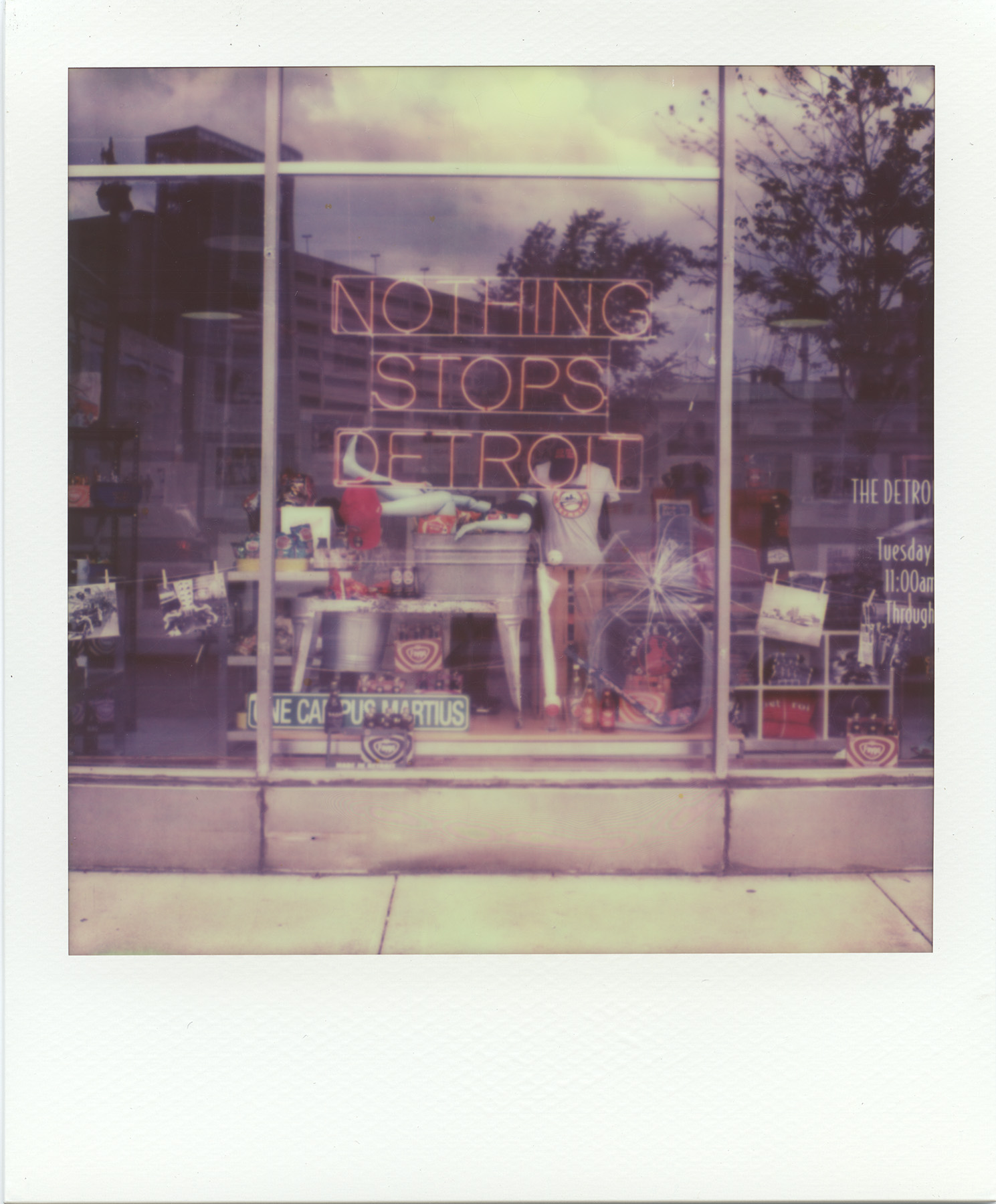
First released in December 2008, TZ Artistic film immediately found its lovers, enchanting them with its unique, creamy colors and instant-vintage look, inspiring artists with its manipulability. One year later, in December 2009, Paul Giambarba designed a special edition packaging for last stock of the remaining, original Polaroid film stock, including the TZ Artistic film.
USA Warehouse: 168 in stock
from our European Warehouse
There is a nice article over at kenrockwell.com about the viability of film. You can check it out here. Long live film!